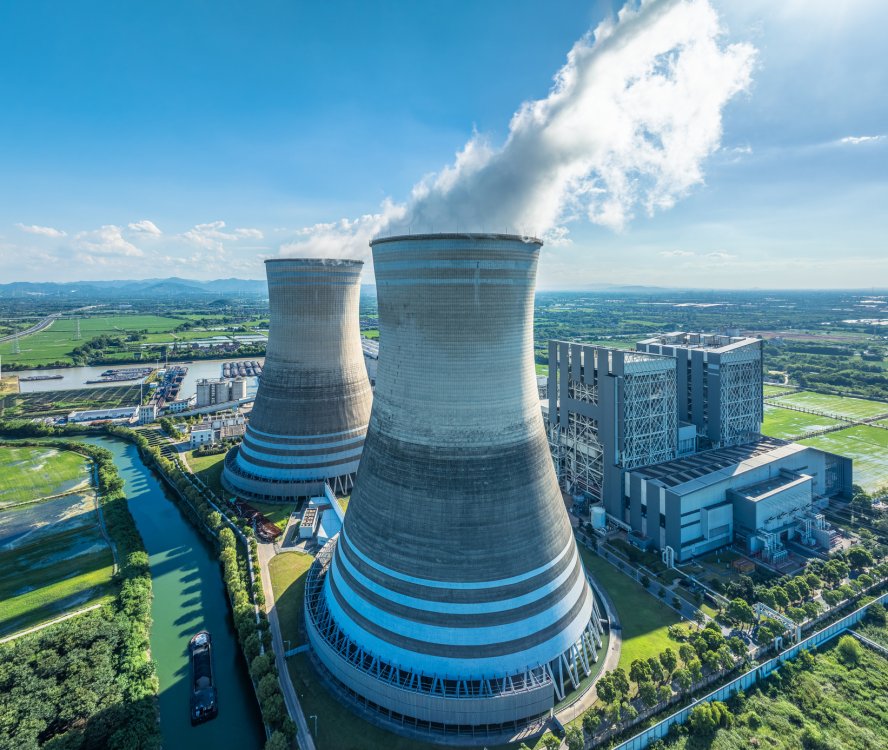

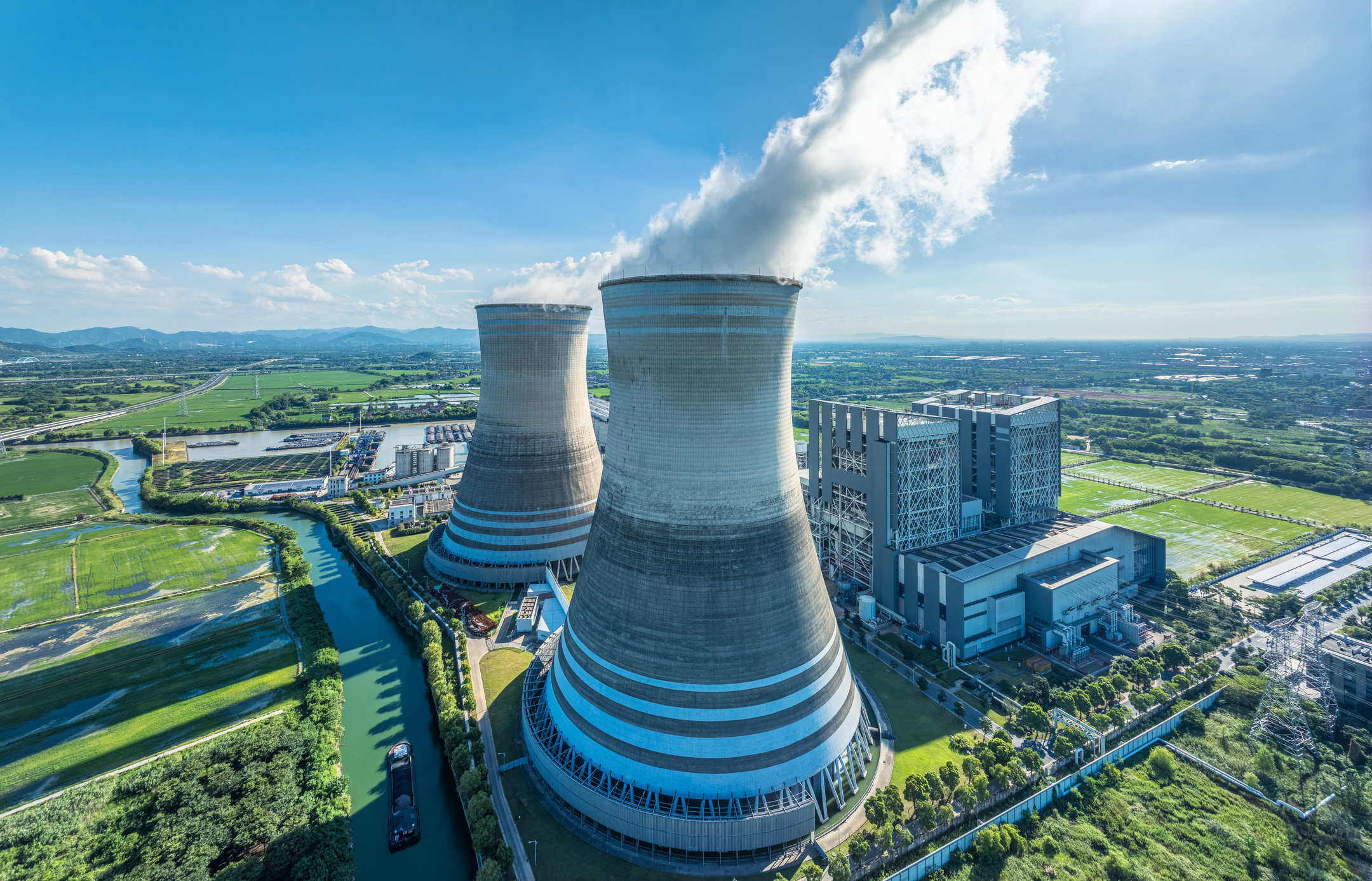
Back in November 2021, we flagged a signal that, at the time, seemed strange: Microsoft was hiring for nuclear technology engineering. The company known for word processing was recruiting nuclear engineers? What could this mean? About a year later, OpenAI released ChatGPT, and it all made sense. AI requires a huge amount of energy. The companies building it were going to need power on a scale they’d never had to think about before.
Fast forward to 2026. Five years after that signal, a tech company signing a big nuclear deal is no longer a surprise. So when Google agreed to help finance 890 megawatts (that’s a lot) of new nuclear power from Constellation Energy, the headline itself wasn’t the story. The interesting part is the second deal tucked inside the first. (Source)
The Deal Inside the Deal
Under a 20-year agreement, Google will help pay for upgrades at 11 of Constellation’s existing reactors. In return for the power, Constellation is also expanding its use of Google Cloud and plans to use Gemini Enterprise (Google’s AI platform for businesses) to plan, permit, build, and run the plants that will power Google’s data centers. (Source)
In other words: Google pays Constellation for electricity, and Constellation pays Google for AI that helps it make more electricity.
That creates a feedback loop in which AI helps expand the power supply that supports its own growth:
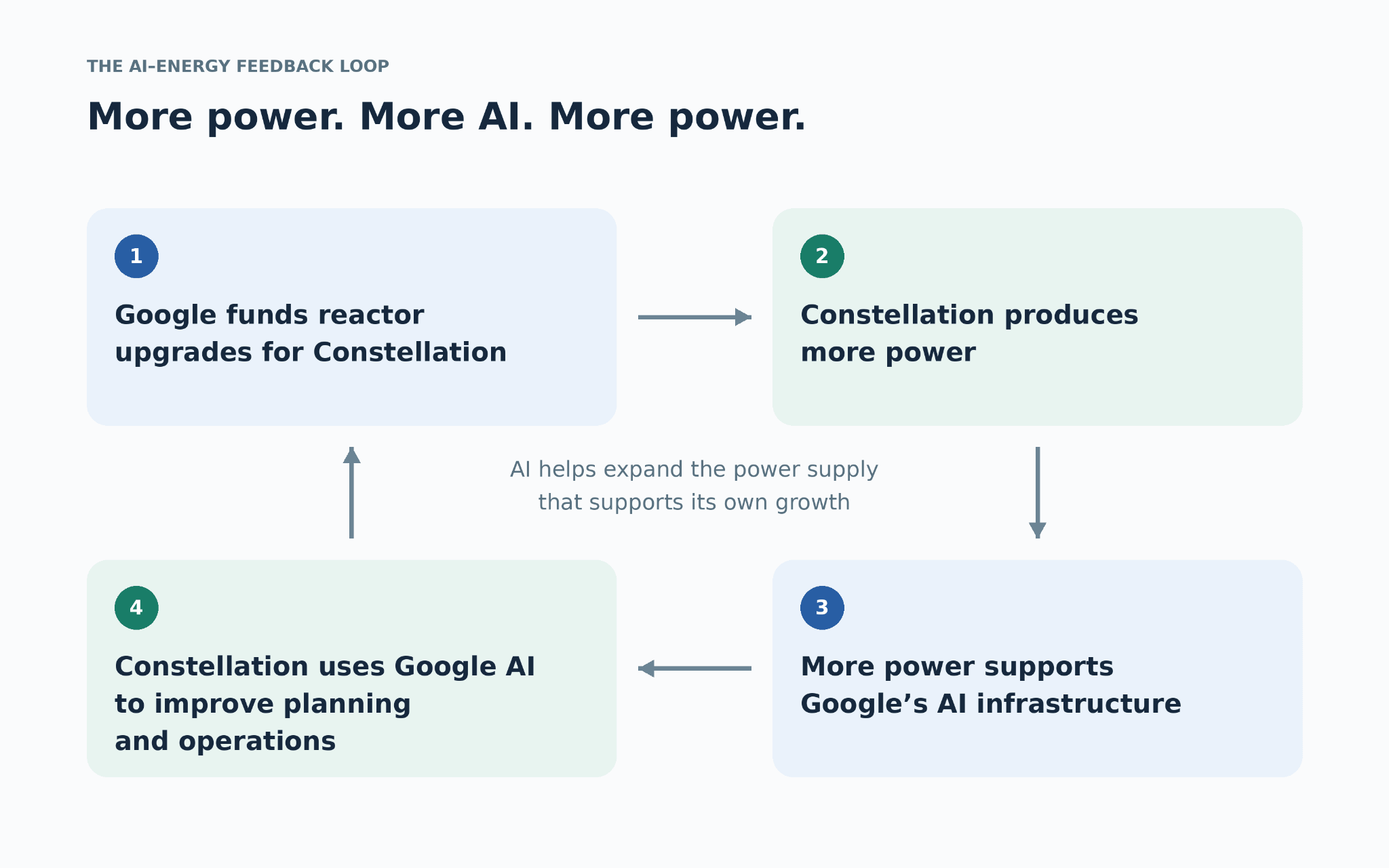
If that last step really speeds things up, AI starts loosening one of the biggest constraints on its own growth. And whoever controls the loop gets to decide who can afford to compete in AI at all.
Bring Your Own Power
Some of the biggest bottlenecks in adding electricity lie beyond the physics of power generation itself. Instead, the bottlenecks are in everything around it: studies, permits, construction schedules, maintenance outages, and above all, the line to connect to the grid. In PJM (Pennsylvania, Jersey, Maryland), the grid operator covering 13 states and D.C. (including Northern Virginia’s “Data Center Alley”), new projects can wait years just for permission to plug in. Each new connection requires engineers to model how it will ripple across the whole grid, and with thousands of projects in line, that analysis has become a real bottleneck. (Source)
That’s why this deal upgrades existing reactors instead of building new ones. Those plants already have a license, a site, and an existing grid connection. Better turbines and controls squeeze out more power without waiting in line. The first upgrade is due in 2028.
Now add Gemini. Constellation plans to use it for finding sites, grid modeling, permitting, equipment monitoring, outage planning, and security. (Source) Of course, nobody is handing a chatbot the keys to a reactor. But engineering reviews, permit applications, and maintenance schedules are paperwork-heavy, coordination-heavy work, exactly where AI is already proving useful. Shorten a refueling outage or a permit review and megawatts arrive sooner. That’s still unproven, but our bet is that it pays off.
The Competition
Now think about who can pull this off. You need serious cash to underwrite a 20-year power commitment, enough demand to justify it, and software good enough that the power company wants to buy it back. Google has all three. Very few companies do.
Now consider that there are only so many reactors to upgrade in the United States. Whoever follows Google will compete for what’s left, then for restarts of retired plants, then for brand-new reactors, each slower and more expensive than the last. Smaller AI companies will lean even harder on the big clouds, not because Google necessarily has the best model, but because it has the electricity to run one.
In this world that the loop creates, competition in AI could become about who can finance and improve the physical systems that make AI possible.
The Catch
The co-dependence this deal creates could deepen over time. If Constellation runs its operations on Google’s software while Google runs its data centers on Constellation’s power, untangling the two gets harder for both. Neither company controls the other, but each could become harder for the other to replace. That one fact can be read two different ways.
The worrying version is that if Constellation runs its permitting, maintenance, and security on Gemini, switching to another AI provider gets expensive and risky. Google, meanwhile, gets to see and influence how a major power producer runs its plants, on top of its position in AI. That’s market power stretching into critical infrastructure. And it’s happening while data-center demand is pushing PJM capacity prices to record highs and into household bills. (Source)
The hopeful version is that this co-dependence is what gets the power built. Constellation won’t spend $4.3 billion on upgrades without a buyer locked in for decades. Google can’t keep growing without power it can count on. Neither company would make this investment alone. Research even suggests that when hyperscalers contract for new generation, they can offset some of the strain their demand puts on the grid, and the benefits reach beyond their own consumption. (Source)
There’s precedent for this working: Intel, TSMC, and Samsung helped fund ASML’s development of the chipmaking equipment their own growth depended on. (Source) That collaboration helped bring a difficult technology into commercial production, the kind of bottleneck-breaking partnership Google and Constellation are betting on.
The Question
Five years ago, a software company hiring nuclear engineers looked strange. Today, an AI leader without a power strategy would look even stranger.
With this Constellation deal, Google is betting that the winners in AI will be the ones that help build the grid it runs on. If the loop works, more power reaches the grid, faster. The open question is whether it also leaves Google holding the keys to infrastructure the rest of us depend on.